Zone focusing is a simple photography technique that helps you capture sharp images quickly without relying heavily on autofocus. It involves manually setting your camera’s focus distance and choosing an aperture that creates a suitable depth of field. This means you can prepare your camera in advance and take a photograph as soon as your subject enters the focused area. Zone focusing is especially useful for street photography, documentary photography, travel photography, and situations where fast reactions are important. Instead of focusing on the subject at the exact moment you press the shutter, you create a “zone” where subjects are expected to appear sharp.
What Is Zone Focusing?
Zone focusing works by using the relationship between focal length, aperture, and depth of field. When you stop down the lens to a smaller aperture, such as f/8 or f/11, more of the scene can remain acceptably sharp. You then manually focus your lens at a selected distance. For example, if you expect people to appear between three and five meters away, you can choose a focus distance that gives you enough depth of field to cover that range. This allows you to take photographs without waiting for autofocus to lock onto your subject.
When Should You Use Zone Focusing?
Zone focusing is most useful when subjects move through a predictable area and you need to react quickly. Street photography is a common example because a photographer may have only a moment to capture a passing person, cyclist, or interesting interaction. It can also be helpful at busy events, markets, demonstrations, concerts, or travel locations where autofocus may occasionally struggle to identify the intended subject. Zone focusing is less useful when your subject is extremely close, moves unpredictably toward or away from you, or requires very precise focus, such as portrait photography with a wide aperture.
Why Use Zone Focusing?
One major advantage of zone focusing is speed. Because the focus distance is already established, you can concentrate on composition, timing, and the moment rather than waiting for autofocus. It can also provide a more discreet shooting experience because you do not need to constantly move the autofocus point around the frame. In some situations, zone focusing can also be more predictable than autofocus, particularly when the scene contains multiple objects that could confuse the camera. With practice, the technique can become almost instinctive.
How to Set Up Zone Focusing
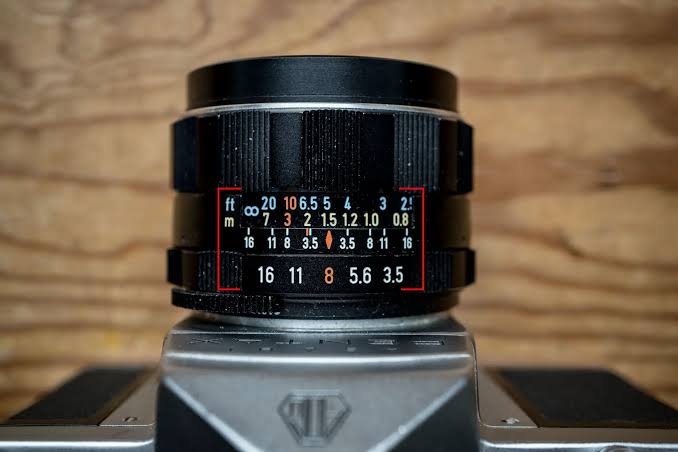
Start by selecting a moderate or wide-angle focal length, as these generally provide more depth of field. Next, choose an aperture that provides enough focus range for your scene. An aperture around f/8 is often a useful starting point in reasonably bright conditions. Estimate the distance at which your subjects will appear and manually set the focus accordingly. Check your camera or lens distance scale if available. Adjust your ISO and shutter speed to maintain a fast enough exposure for moving subjects. Before shooting, consider the expected distance range and make sure your depth of field covers it.
Zone Focusing in Different Conditions
Lighting conditions can significantly affect zone focusing. In bright daylight, a smaller aperture and lower ISO can make it easier to create a broad focus zone. In low light, you may need to open the aperture, which reduces depth of field. Increasing ISO can allow you to maintain a smaller aperture and faster shutter speed, depending on your camera. Wide-angle lenses are generally easier to use for zone focusing because they naturally provide greater depth of field than longer lenses at comparable distances.
Common Mistakes to Avoid
A common mistake is assuming that a small aperture automatically makes everything sharp. Depth of field still depends on focus distance, focal length, aperture, and sensor characteristics. Another mistake is choosing a focus zone that does not match the actual distance of your subjects. Photographers should also avoid using unnecessarily slow shutter speeds when photographing moving people. Practicing at different distances and apertures will help you understand how much of the scene will remain acceptably sharp.
Conclusion
Zone focusing is a practical technique that can make photography faster and more responsive. By setting your focus distance in advance and creating an appropriate depth-of-field zone, you can capture spontaneous moments without depending entirely on autofocus. Although it requires some understanding of distance, aperture, and composition, the technique becomes easier with regular practice. For photographers interested in street, travel, and documentary photography, zone focusing can be a valuable addition to their shooting approach.